High Pathogenic Avian Influenza

High Pathogenic Avian Influenza

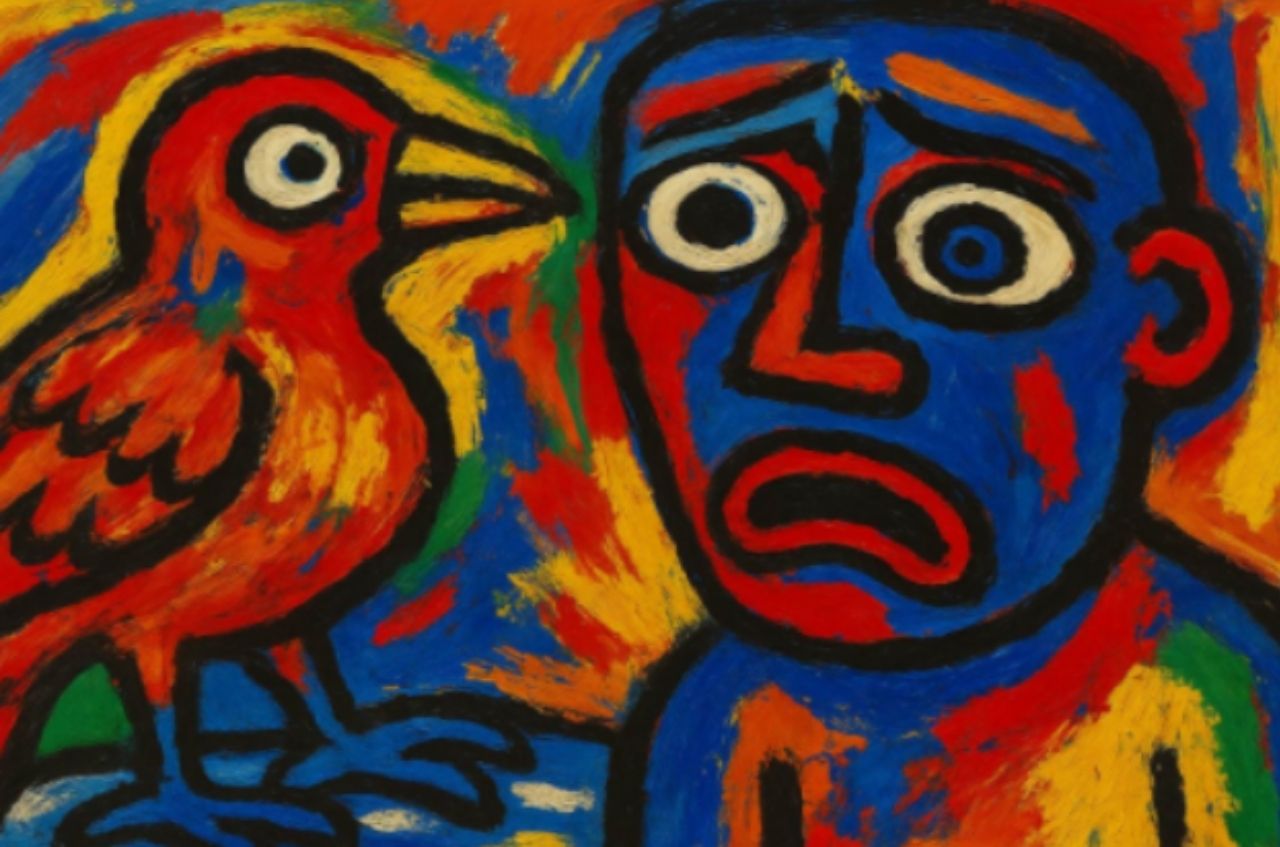
Image in the eyes of Karel Appel – from 100,000 to 1 bird – a catastrophic event
Avian Influenza Is No Longer an Incident — It Is a Systemic Warning
Once again, the Netherlands is confronted with outbreaks of high pathogenic avian influenza. Poultry farms are locked down, transport is restricted, and thousands—sometimes millions—of birds are killed. We call it culling, a technical term that softens the reality: large-scale killing of healthy and infected animals alike.
This has become an almost annual routine.

The Netherlands is one of the world’s most intensive poultry-producing countries. Millions of chickens, ducks, and geese are kept in high-density farming systems, often clustered closely together. At the same time, our country lies on one of the most important migratory bird routes on the planet. These wild birds carry avian influenza viruses across continents. When these viruses meet dense poultry populations, outbreaks are almost inevitable.

When an outbreak is declared “high pathogenic,” the response is swift and uncompromising: entire farms are emptied, movement is restricted within a radius of several kilometres, and human access is limited to the bare minimum. These measures are necessary from a public-health perspective, but they come at enormous cost—financially, emotionally, and ethically.
A recent development makes the situation even more urgent. An avian influenza strain has crossed the species barrier and infected cats. In one confirmed case, a litter of kittens living near a poultry farm died after contracting the virus. This is not an isolated curiosity. Each time an influenza virus jumps species, it demonstrates its capacity to adapt. And every adaptation increases the risk—however small—of eventual transmission to humans.

This is why avian influenza is not just an agricultural problem. It is a public-health concern with pandemic potential.
The poultry sector is economically important to the Netherlands. It provides jobs, exports, and revenue. That reality cannot be ignored. But neither can the fact that our current system repeatedly places us in a position where mass killing becomes the only available solution.
The uncomfortable question we must face is not whether farmers are to blame—they are not—but whether the system itself has become too fragile.

Do we truly want to remain one of the world’s leading poultry exporters at any cost? Or is it time to scale back, reduce density, and accept lower production in exchange for greater resilience, animal welfare, and public safety?
These are not choices for veterinarians or public-health professionals alone. They are societal choices, to be debated openly and decided politically.
Avian influenza is no longer an unfortunate incident. It is a recurring signal that our food-production model is operating at the edge of biological reality. Ignoring that signal does not make us safer. Listening to it might.

Geef een reactie

Je e-mailadres wordt niet gepubliceerd. Vereiste velden zijn gemarkeerd met *

Recent posts

Send A Message